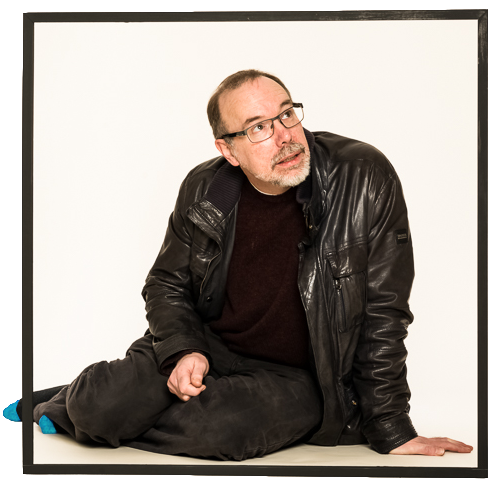
Remembering John Lucas 1937-2025
My friend John Lucas, who died last September, would have been 89 today. John was a poet, professor, publisher, essayist, memoirist, novelist, anthologist, critic and jazzman (not necessarily in that order). There are many tributes online and a Guardian obituary by our mutual friend, Michael Eaton. I was too shaken by John’s death to write about him when asked back then. John decided to stop writing obituaries after doing one too many about a friend much younger than him. He was more than twenty years older than me, but had such zest for life that a world without him in it seems unimaginable.
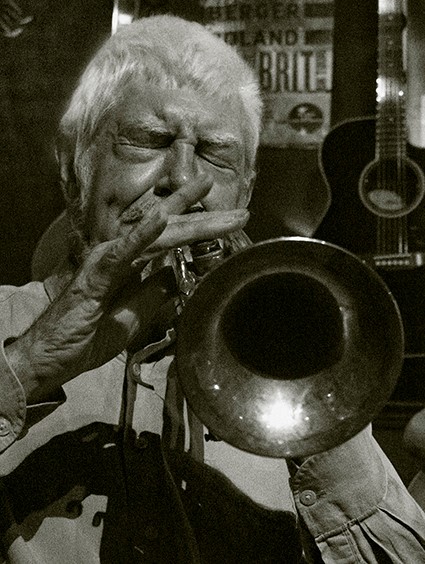
John playing his cornet, at the Guitar Bar, 10.35pm 19th June 2013 by Graham Lester George.
John was born in Exeter and moved to Ashford, Surrey, when he was ten. His dad was an insurance inspector and his mum an office worker. John studied English and Philosophy at Reading University, where he met his wife-to-be, Pauline van Meeteren. They married in 1961 and, in 1964, moved to Nottingham, where he became a lecturer in English Literature.
I first ran into John in 1977. I was in my first year studying English and American literature in Nottingham. He’d recently left the University of Nottingham to head a new English and Drama department at Loughborough University. Still, he and poet Tom Paulin (who became my final year tutor and dissertation supervisor) continued to organise lunchtime poetry readings in the university’s Portland Building. John was a kind of mentor to Tom, as he was for many other writers over the years. I would join the poets in the bar after the reading and hang out with them. At least once, John bought me a half of bitter. John could give the impression of being a stern, intellectually challenging figure, and he was certainly the latter. He hated having his photo taken and a later university profile picture displayed the scowl of a fierce criminal wanted for some terrible mass murder. True, John didn’t suffer fools gladly, but he’d dismiss a foolish remark with a wry comment and his characteristically wicked humour, often embellished with a century old catchphrase or music hall quotation. Some younger writers regarded him with an awe that left them self-consciously awkward in his presence, though John would always seek to defuse pomp, cant and uncomfortable situations.
For two decades I would see John around, principally at poetry readings in Beeston. Then, in the mid-90s, I began a friendship with my neighbour, the Booker Prize winning novelist Stanley Middleton. Stan, despite the forty-year age gap between us, shared a lot of my literary sensibilities. He was surprised I didn’t know John. Soon, inadvertently, he was to bring us together. I had met Stanley because of City of Crime, an anthology I edited for Five Leaves Publications. The book, launched at the 1997 Bouchercon international crime writing conference, taking place in Nottingham that year, combined Crime and ‘literary’ fiction writers from or based in Nottingham. I suggested to the publisher, Ross Bradshaw (whose press would later spawn Five Leaves Bookshop), also a Middleton admirer, that it would be a good idea to publish a festschrift for Stanley’s 80th birthday, in August 1999. Ross told me that someone else had made the same suggestion, and we probably ought to meet.
John came round one sunny afternoon in spring ’98. We quickly hit it off, agreeing to edit the book together, provided Stanley would agree to it. Stan’s blessing took three attempts and a certain amount of arm twisting on my behalf, but the author was very pleased with the resulting volume – now out of print – and bought multiple extra copies to give away. John and I were a little wary of each other at first but John, like Stanley, respected that I made my living entirely from writing. I was happy to ride that piece of luck. John was a polymath at a level far beyond my own set of ongoing obsessions, but we did share a great number of enthusiasms and opinions (not including Cricket, another passion of John’s, though my partner Sue was keen on the sport. John captained and bowled for the university staff team. Many friends have also told me stories about playing football alongside him in the English Dept team).
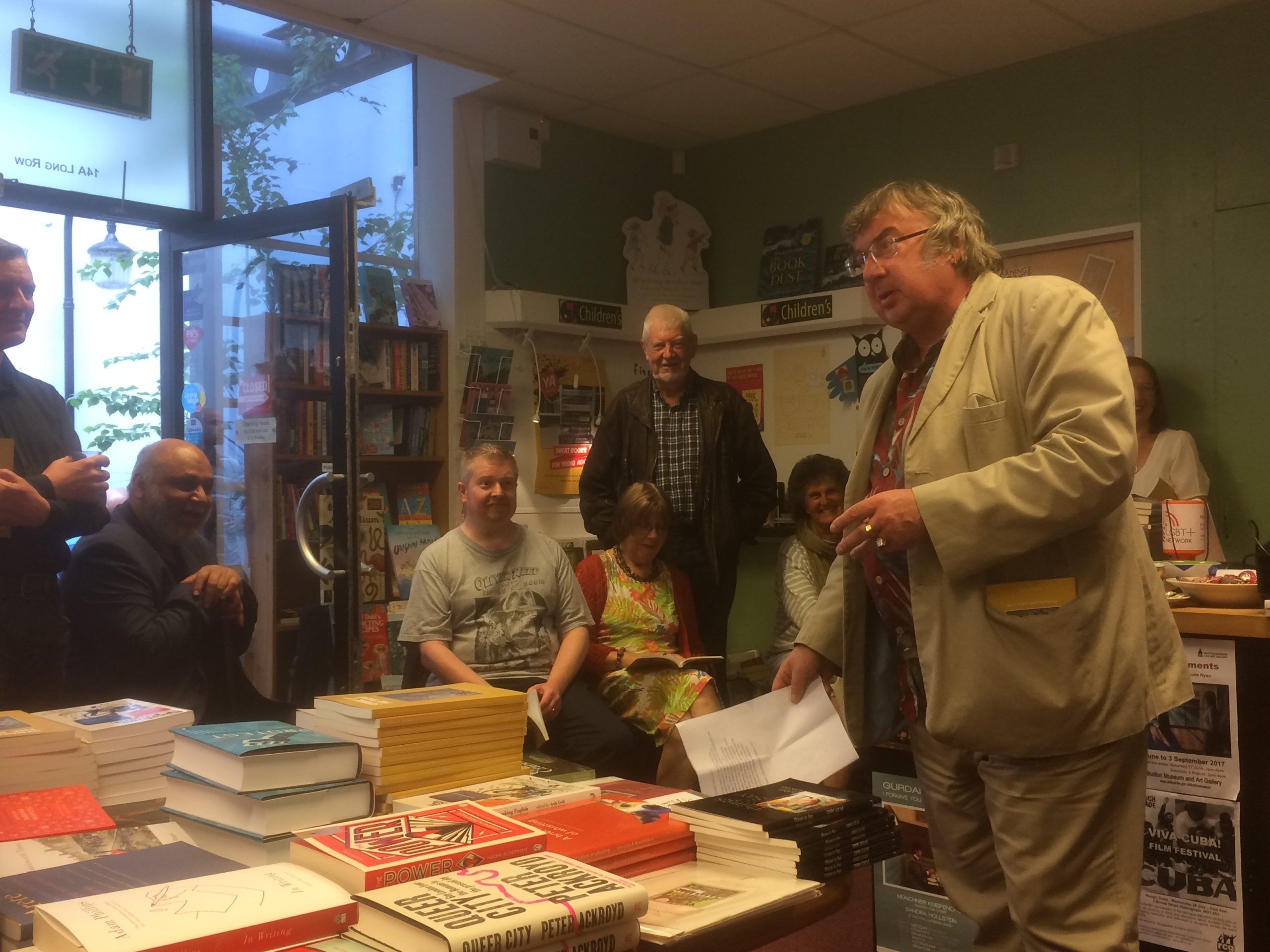
John and Pauline (+ Wayne, Mahendra, Neil and Jenny) watching our mutual friend Michael Eaton, who wrote the Guardian’s obituar of John, at his Five Leaves book launch.
With John, there was always something new to discuss, and John had a vast stock of anecdotes from his rich past, along with a remarkable memory that lent itself to extensive, accurate and apposite quotation from writer he loved. I was most taken by John’s endless curiosity and generosity of spirit. He had strong opinions, and contempt for those who he considered frauds or, worse, crossed him, though he was quick to forgive minor transgressions. He was a pragmatic socialist with a particular aversion to the death penalty but an affection for and tolerance of human folly, especially in his friends. He would tell stories against himself, the worst involving a night in a Tasmanian prison after drink had been taken and a car driven, though his heavy drinking days – if such they were – were long behind him by the time we became friends.
Odd to realise that I’m several years older now than John was when we met. Through him, I got to know many other writers, too many to list. Most significant, perhaps, was the late Australian poet Peter Porter, who John had brought in as a visiting professor at NTU. Peter was, like John, an example of that near extinct breed, the renaissance man, with a huge intellect, vast range of knowledge and memory that allowed him to quote endless poetry.
In 1997, the poet Sue Dymoke, my partner since we met on a teacher training course in 1983, had published widely in magazines and authored three pamphlets of poetry. She was about to embark on the PhD that would lead her into a twenty-year career in academia. Sue also took to John. Soon, we got to know Pauline, an artist, too. Later that year, John published Sue’s pamphlet Lifting the Language.
John and I were blessed with life partners who supported and understood our passionate ambitions. The four of us always had plenty to talk about. In 2002, we first holidayed with John and Pauline on the Greek island of Aegina, not far from Athens, where the couple had a rented flat and a wide circle of friends. The Aegina connection was the result of a year spent as Lord Byron visiting professor at the University of Athens in 1984. It’s a lovably non-touristic island, quintessentially Greek and mostly visited by nearby Athenians.
Twenty years later, John wrote about his Athens year in what is probably the best of his several memoirs, the prize-winning 92, Acharnon Street. It’s a beautifully written, hugely entertaining account of the author’s love affair with Greece. From finding that his new flat is on a street full of brothels, to ludicrous encounters with bureaucracy (especially in Greek universities) and encounters with Greek poets, it’s often very funny. The subject matter is politics, poetry and, most of all, friendship, with many scenes played out in an endless array of appealing tavernas – and some not so appealing, from the mid-80’s to the present day. In the memoir, John wears his erudition lightly and modestly, drawing the reader in, making the reader want to visit or return to Greece soon and often.
In Athens, Aegina and neighbouring islands, John was in his element, utterly relaxed. We talked endlessly. On our second trip there, I asked John and Pauline’s permission to dedicate my first novel for adults, The Pretender, to them. John dedicated his great 2006 Smokestack collection Flute Music to us. For twenty years, I was also his literary executor, which involved an interesting annual conversation. A few years ago, the official advice on whether one was needed changed and I stood down. John insisted on giving me a cheque in recompense for carrying out my (light) duties. I spent the money on a rare book edited by his late friend B.S. Johnson, which I immediately lent to him. Rare volumes didn’t interest John as they did me, for publishers can’t also be collectors, but the book was full of pieces by his friends.
Shoestring Press, John’s small press, was still young when I got to know him. Its predecessor, The Byron Press, had published a small run of pamphlets in the late sixties, including one by Bryan (B.S.) Johnson, who he had many stories about. Through John, I was to meet (and later write an obituary of) their mutual friend, Barry Cole. Barry turned out to be a great admirer of Stanley Middleton and had sent him fan letters: small world, literature. John published Inside: Outside, Barry’s new and collected poems, his best work. The novels had dried up after Johnson’s suicide in 1973. Barry found his body.
For thirty years, Shoestring became the home of a cascade of poets, a few of them, like Sue, much younger than John, but many who had been around for a long while, become unfashionable and lost their publisher. It was a labour of love. John edited meticulously and inventively, although he did have terrible handwriting. Sue and I spent many hours deciphering John’s scrawl on those frequent postcards. Although these were the days of email, the phone call and postcard (occasionally, if there was something lengthy to discuss, a letter) were his means of communication. John never used the internet. In time, Pauline would be forced (semi-grudgingly) to reply to some important emails on his behalf. John did eventually acquire a computer, on which he wrote many novels, reviews, articles and letters which Pauline would transfer to a memory stick if they needed to be sent online. This allowed him, for instancecrik to make numerous contributions to online review journal London Grip, not that he would have ever looked at it.
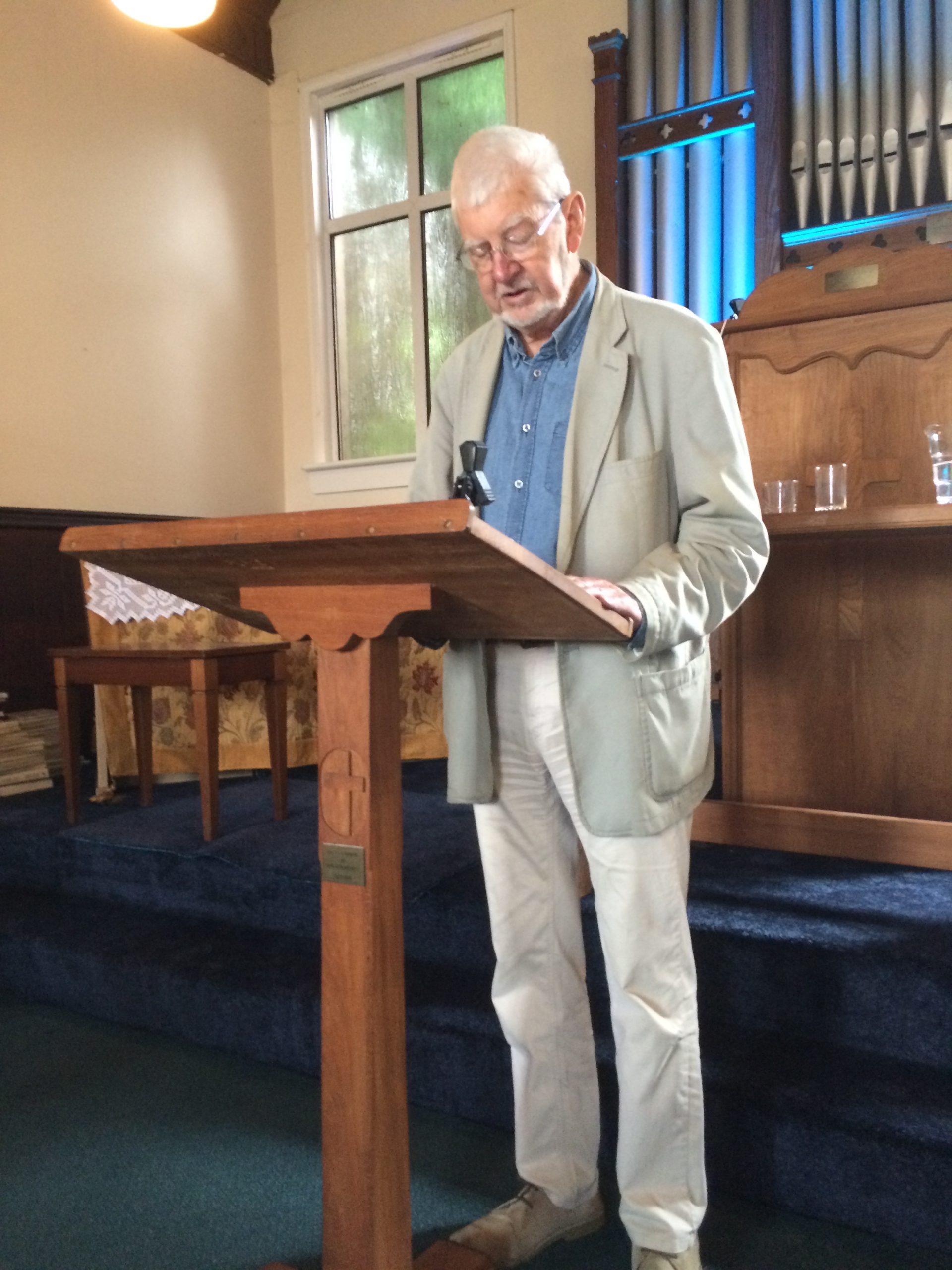
John reading at Lowdham Book Festival.
In 2003, John reached 65 and retired for the second time. He had stood down as a professor at the University of Loughborough but been persuaded to return part time as a prof at Nottingham Trent. The year before, John and Stanley had been my referees for a part time job at NTU, teaching Creative Writing. I wouldn’t have known that the post was going had it not been for a walk we went on with the Lucases and Mahendra Solanki, who ran the MA that I was soon to take over. Another debt I owe to John. ‘I can’t understand why you want the job,’ he told me, when I said I was going for it. I replied that the .5 job would double my income. ‘Fair enough’, he said, and – though I’ve not read it – I’m told that he gave me a reference so strong, it was impossible for the university not to take me on.John reading at Lowdham Book Festival.
During my first year on a temporary contract, John generously shared his office with me. On his leaving card, I wrote ‘try to retire a little bit’. I don’t think the idea ever occurred to him. Retirement from paid intellectual work isn’t the occasion for rest, but for change, and John thrust himself deeper into publishing, organising events and writing more personal work, including several novels. John took up novel writing in his 70s, an age at which many novelists choose to stop.
Those events included Jazz and Poetry, a series of readings combined with trad jazz from Four in the Bar (or five, or six, with John always on cornet) at Nottingham’s Guitar Bar, a short walk from my home. I MCed and helped choose poets until a combination of the sudden closure of the bar and Sue’s cancer treatment decided us to call it a day. Back then, I used to shoot video with a little flip camera. There’s a healthy archive of both jazz and poetry on YouTube, including lots of John playing, although, sadly, I never shot any footage of him reading his poetry. On the same YouTube channel can be found a video from J&P’s predecessor, a series of Shoestring readings at Beeston’s Flying Goose Café, showing the last ever reading by Roy Fisher, a poet and jazz musician who John admired greatly (he was also a friend of Sue’s).
Early this century, John became Sue’s main publisher. Over twenty years, Shoestring put out four full collections, of which she was very proud. She enormously valued John’s editorial suggestions and interventions. He spoke, as her publisher, at Sue’s memorial in University Hall in 2023, the same day publishing her final collection What to do Next. It was a sad but satisfying privilege to work on that book with him.
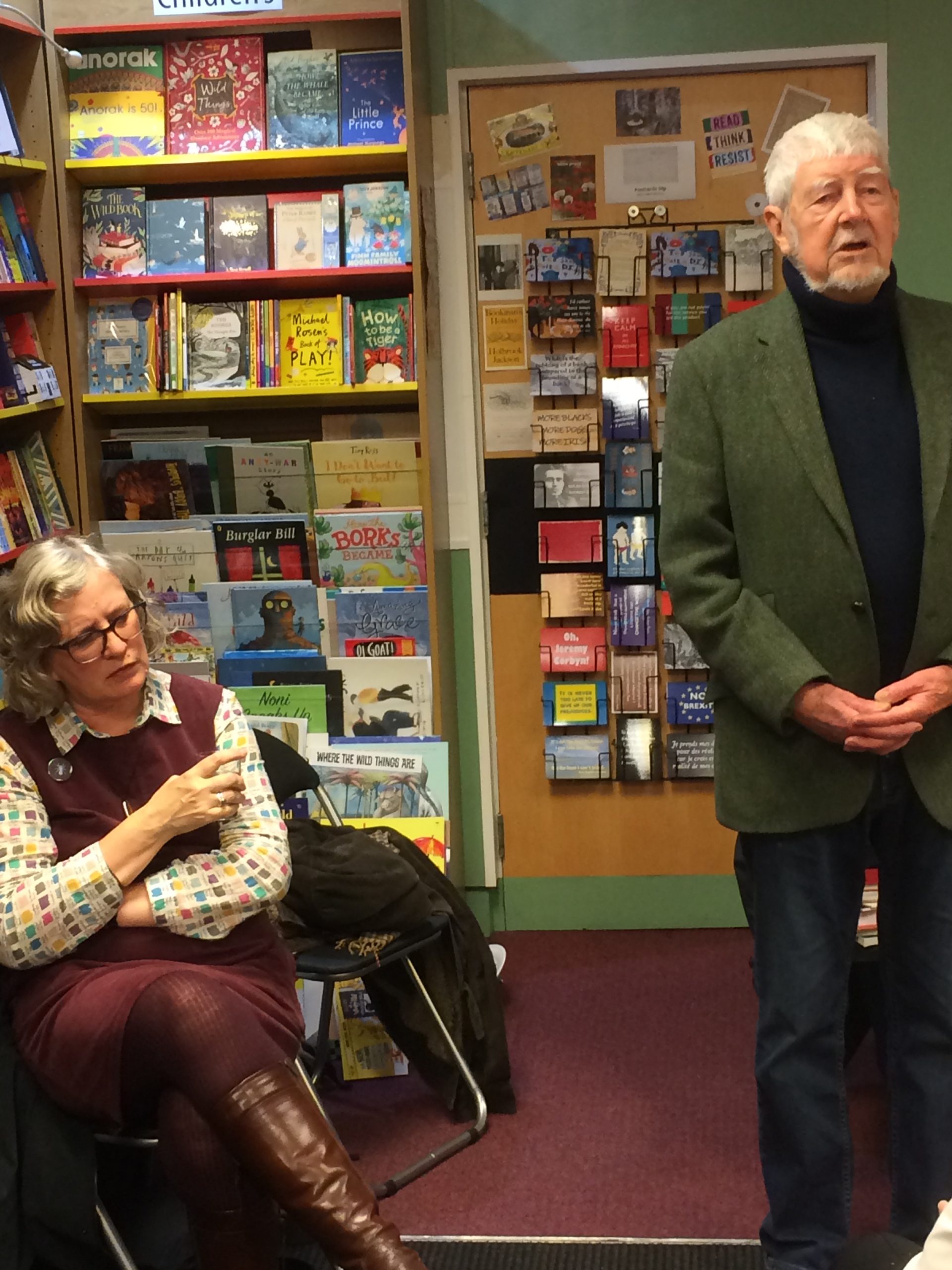
John introducing Sue Dymoke at the launch of her 2019 collection What They Left Behind at Five Leaves Bookshop in 2019.
John published a huge number of books (most of which are listed here): memoir, criticism, student’s guides, several novels and a lot of poetry. With 1980’s The Melancholy Man he made an enormous contribution to Dickens scholarship. However it’s John’s personal essays and memoirs that remain my favourites, closely followed by the poems.
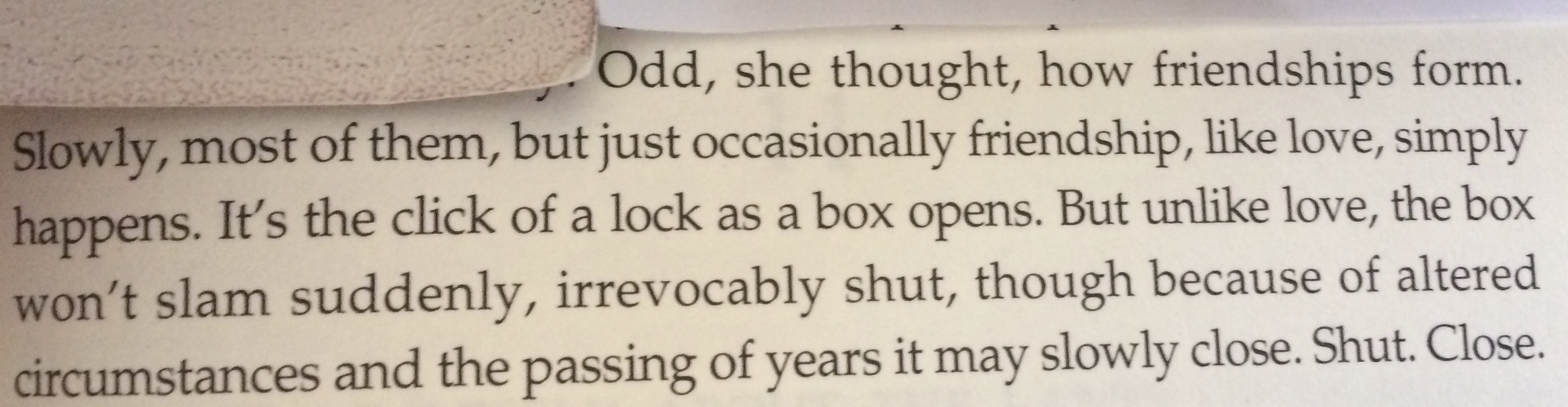
From John’s novel Julia (Greenwich Exchange 2019)
Friendship was the quality in John that I admired most, even more than his erudition, skill at publishing and sharp, generous editing. He excelled at friendship. The last book John published during his lifetime, The Moon Looks On Them All is subtitled of friends and friendship. It’s a tribute to ‘salters’, as he called them, ranging from a much-loved cat to Matt Simpson and EM Forster, who he’d met as a teenager, although he modestly fails to mention this. Never a name dropper, John (though always a great gossip or, if you prefer, storyteller).
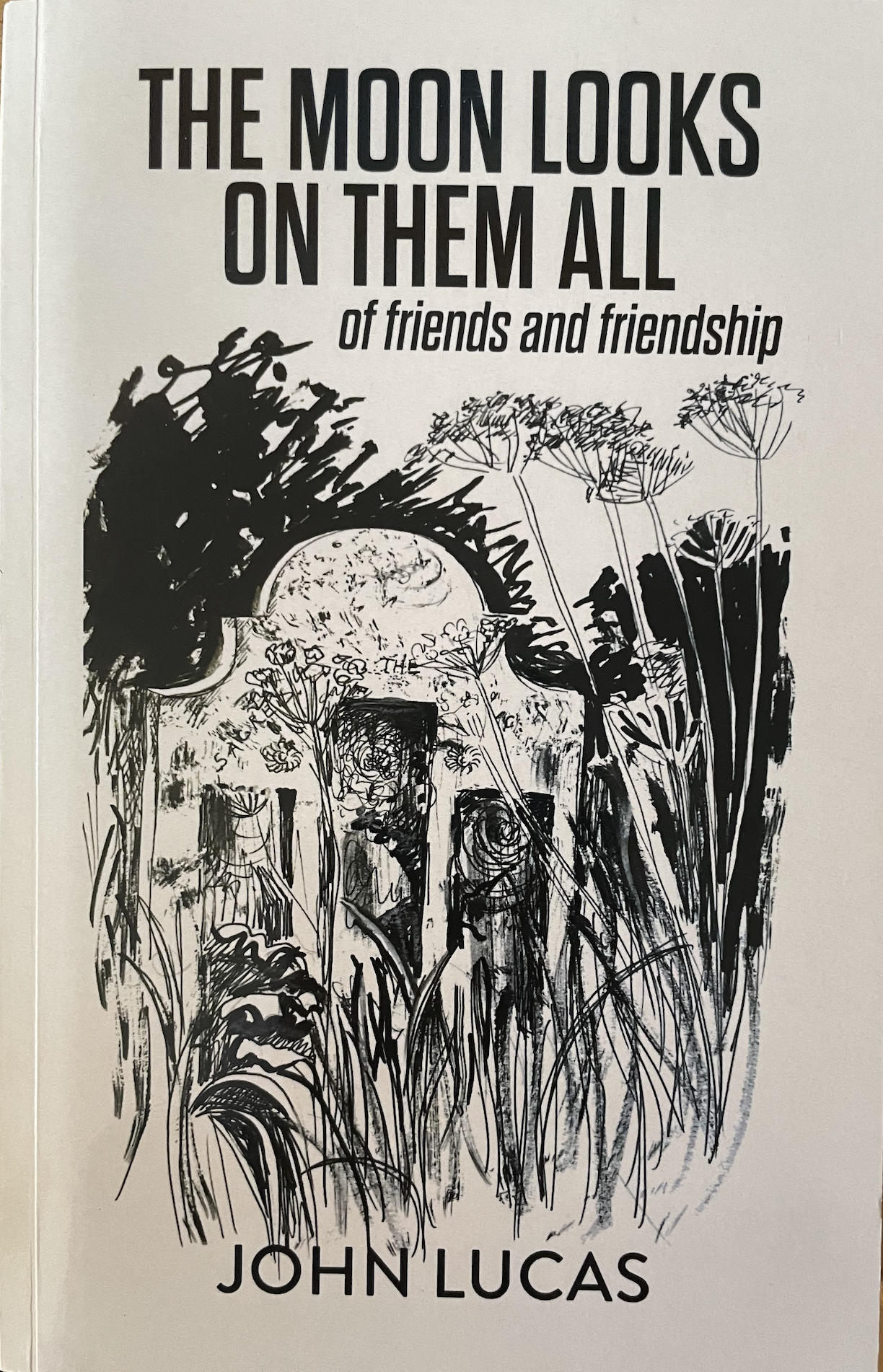
The cover is, of course, by Pauline Lucas
Forster’s Only connect might have been John’s mantra, had he been the sort of person who had a mantra. In 2000, when I had a writer in residence gig in Liverpool, city of my youth, John insisted that I must go for a drink with his old mate, Matt Simpson. ‘That’s John for you,’ Matt told me. ‘He thinks all of his friends should be friends with each other.’ John continued making new friends throughout the thirty years I knew him and retained a kind of wide-eyed amazement at some of the writers whose work he admired. If there was one particular quality that contributed to our friendship, it was this: we were both keen fans.
Shoestring Press had become one of the country’s biggest poetry publishers (third biggest, at one point) but it was also an expression of friendship, keeping talented but no longer new poets (and occasionally, writers of fiction or memoir) in print, in beautifully produced books, often enhanced by Pauline’s cover illustrations. These books, he always claimed, more than broke even. Each paid for the next. Shoestring subsidised the musician’s payments for the jazz and poetry nights at The Guitar Bar, where John led the band. If we were lucky, the money we took on the door covered the poets’ travel expenses, but never much more. I still have the little blackboard that we used to put up with the J&P running times (I bought it in the Guitar Bar’s flash closing-down sale). Sue was well enough to attend this one and write the evening’s bill. The blackboard now lives in the library garage on my allotment, and hasn’t been wiped since the final J&P, by which time the sudden eviction of the Guitar Bar from the Hotel Deux building had taken us to the Polish Eagle Club across the road.
Over the next nine years, John kept organising readings and spoke every year at the King’s Lynn literary festival. The readings were mostly at Nottingham’s Five Leaves Bookshop. Over the last two or three years, he became increasingly frail, so much so that he didn’t make it to the Bell Inn after the last reading, which featured Rob Etty, John Harvey and Andrew Sant.
There are many ways in which, over the years, I’ve learned from John. His generous urge to make the world a better place without seeking credit for his achievements, that’s the quality I’d most like to emulate. John had contempt for the honours system. If anyone had tried to get him one of the accolades that he richly deserved (an RSL fellowship, for instance, which Stanley accepted despite having turned down an OBE), I’m not sure he would’ve accepted it.
John was the most driven person I’ve known. A few days before his death, when he must have known his chances were slim, he was still making plans for new books and offering suggestions as to how I might publish my Greene in Nottingham novel. ‘It’s what keeps me going,’ he said, almost apologetically. He lived his life at full pelt, with a rich family life that was lovingly and movingly displayed at his funeral. Writing can be a selfish career. Many authors nowhere near as talented or productive as John sacrificed family for their career, but Pauline, their children, Ben and Emma, and grandchildren, Amanda, Sam and Macayla meant everything to John. And vice versa. The family holidays they spent together on Aegina were legend.
I’ll always be grateful for the luck which brought John and Pauline into our lives. I’ve known many writers and educators who made a big impact on the world. None has made as big an impact on my world as John did. I miss his company very much, always will. But his voice will always be on call in my head, and in his books. If you haven’t read his work yet, you’re in for a treat. His was a life well lived and I’m very lucky to have shared some of that life with him.
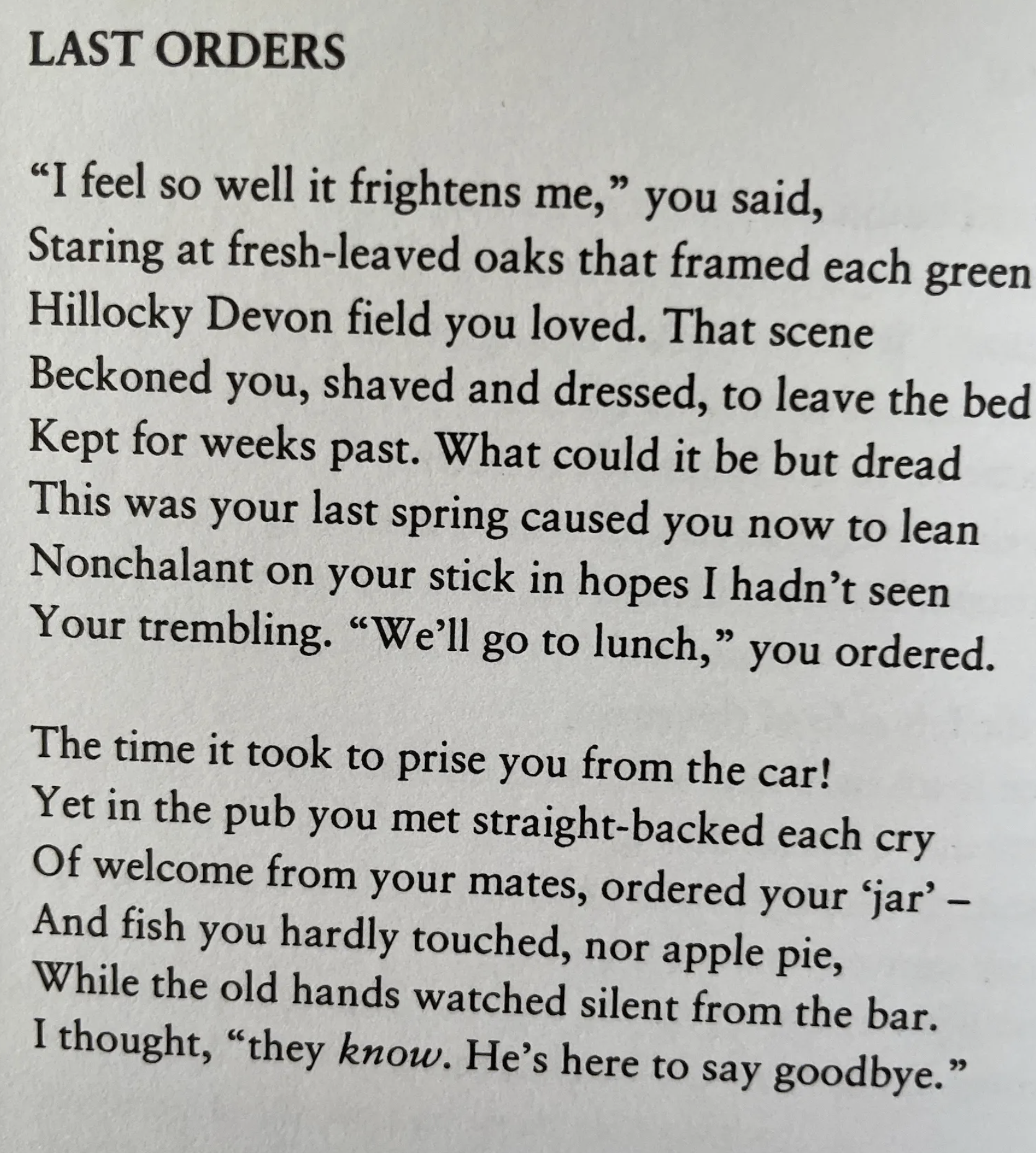
Last Orders from John’s 2000 collection On The Track is about John’s father.
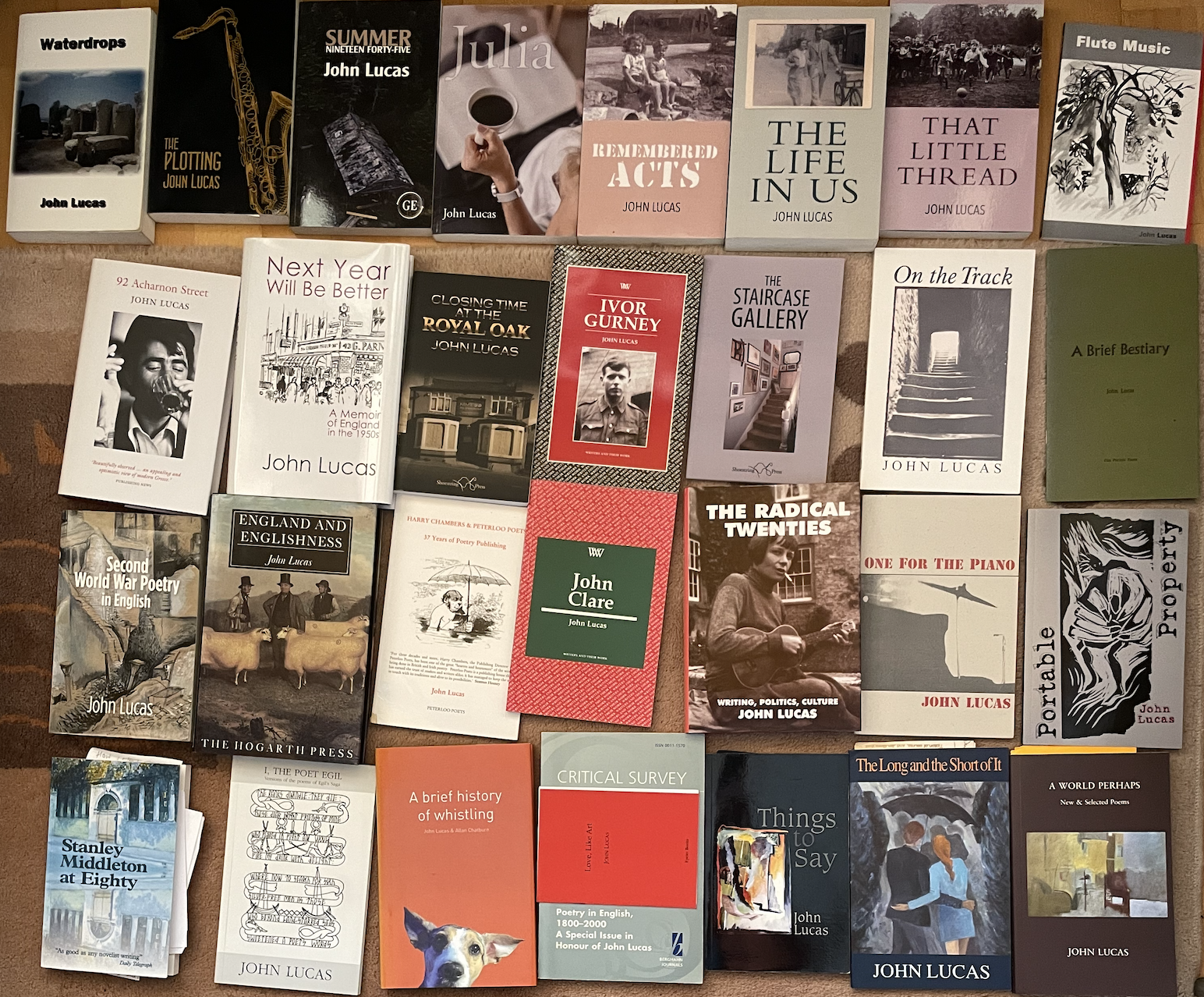
Most, but by no means all of John’s books from my library. Could whoever borrowed my copy of The Melancholy Man give it back, please?
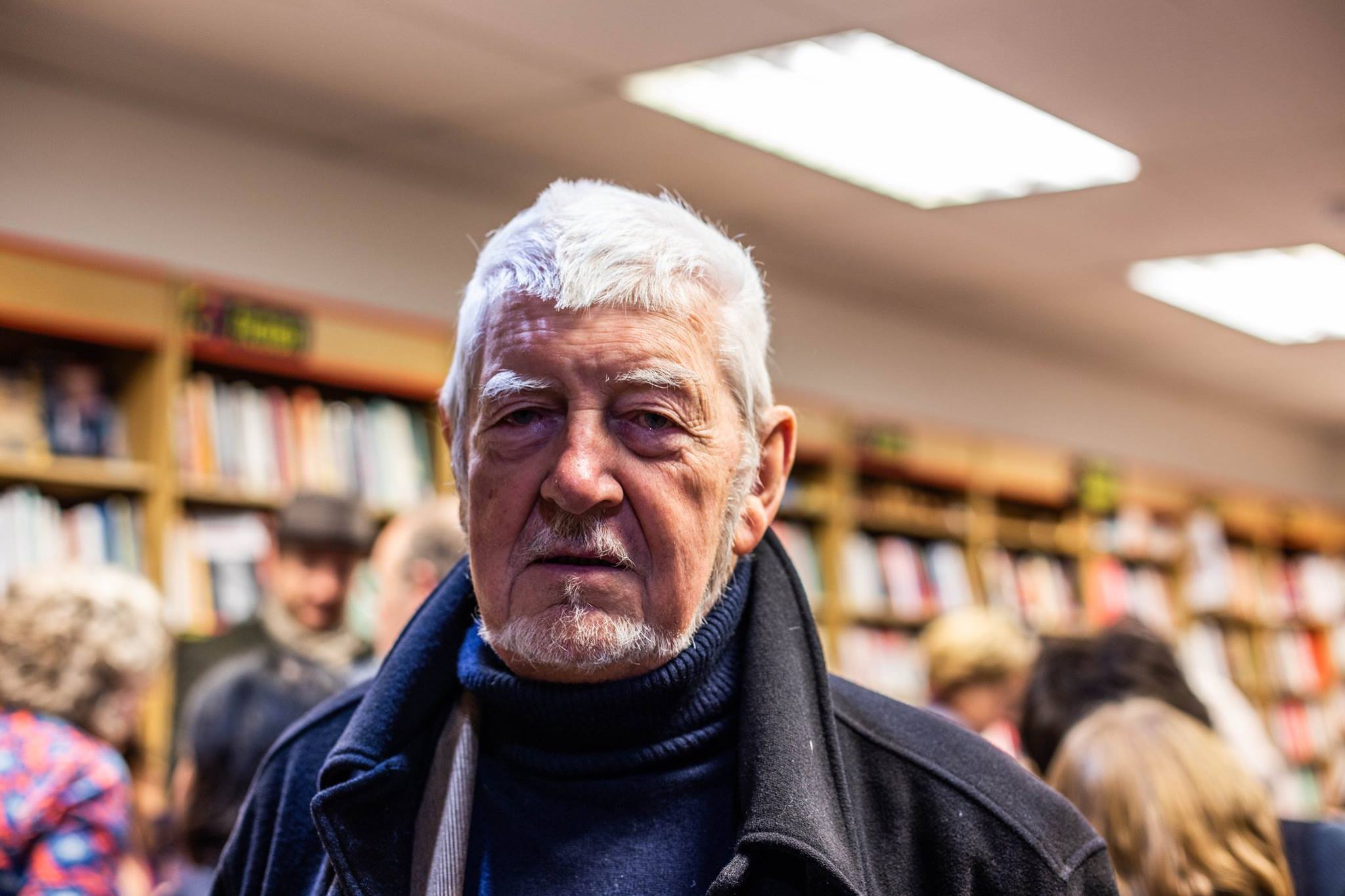
John in Five Leaves Bookshop (photo: Jake Spencer)
